Written by Clare Burder, Winemaker at Eminence Wines, 2026
It’s so damn confusing! Grigio / Gris – surely they are different??! Why are they sometimes white, and sometimes orange???
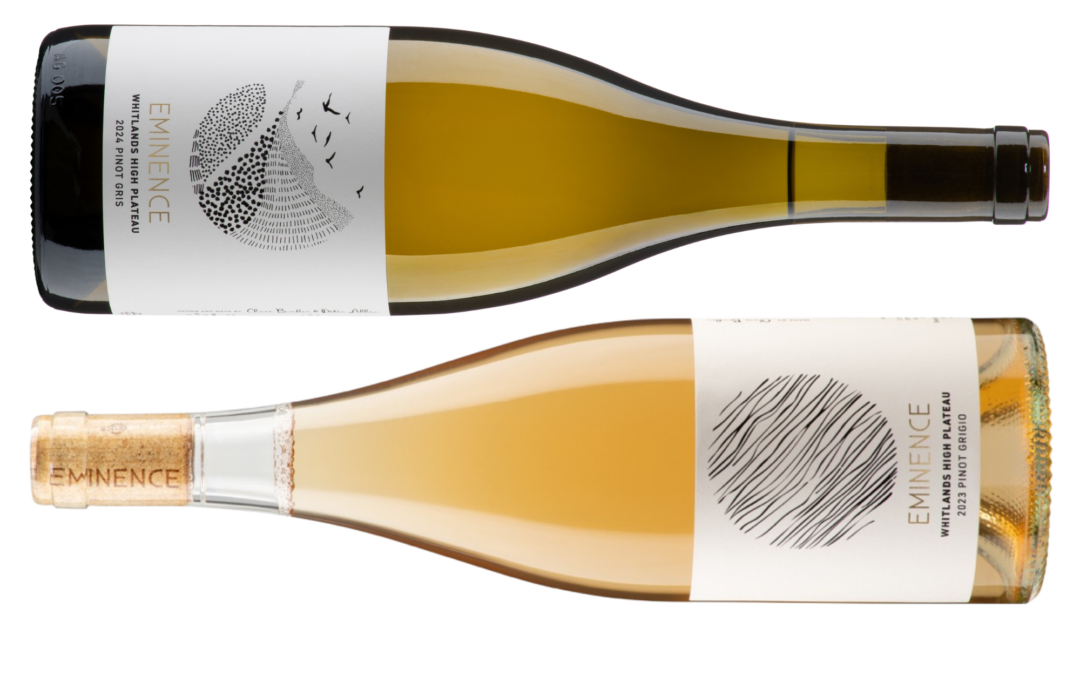
First things first: These two are the same grape variety, made in different ways. In their respective European homelands of Alto Adige (Italy) and Alsace (France), this distinction is very clear and the wines are quite predictable. In Australia, we love to confuse you, so it might be labelled pinot gris, and actually be made more like an Italian pinot grigio. It might be white, bronze or properly orange, it will probably be dry but there is variation in sweetness also. Arrrgh.
A couple of fundamentals to revisit before we get to the table below:
Sugar: If all of the sugars in the grape are converted into alcohol, the wine is said to be technically ‘dry’ (this is different to a wine feeling dry – which is mostly about acid and tannin). If the winemaker chooses, they can leave some sugar in the wine, which is known as residual sugar (RS). Some pinot gris wines have some RS which is where the confusion sets in. More on this soon.
Grape ripeness: Ripe grapes give higher alcohols and riper flavours, so the 11.5 per cent pinot grigio bought from King Valley (picked early) will most likely have a leaner, less-ripe flavour profile, showing more citrus and apple, and be fairly light-bodied. Compare this to the 14.5 per cent wine from Alsace which will be fuller-bodied with more stone-fruit and tropical flavours, in addition to some winemaking flavours as per below.
Colour: Pinot gris/grigio grapes have fairly dark colours skins – sort of a mauve/bronze colour. If they are pressed gently and nothing comes out of the skins, then the resulting wine will be white. If skins are used in the ferment then some colour will leach out. A few days on skins might give a blush/bronze colour, and a week or more will give a deeper orange. Along with this colour comes more flavour too. More on this below.
| White grigio / gris summary | ||
|---|---|---|
| Flavours from the grape pulp (not skins) in order from least ripe to most ripe…Lemon – Apple – Pear – Ripe pear – Almond – Warm spice – Fruit salad | ||
| Pinot grigio (Italian style) | In-between styles | Pinot gris (French style) |
| Classically Italian pinot grigio is picked earlier, so it’s lighter in body, lighter in alcohol and more neutral in flavour. Normally these wines are made exclusively in stainless steel to showcase the fresh grape characters. Traditionally these wines are dry and do not age well. Typically under 12.5% ABV | Common in Australia, the in-between style has all the freshness and zing of grigio, yet some of the texture and richness of gris. Most of these wines are dry, and made in stainless steel – perhaps with a portion of barrel fermentation or lees contact. Typically between 12% and 13% ABV | French pinot gris from Alsace is traditionally picked a little riper, and so is fuller-bodied, with higher alcohols and riper flavours. Often more complex, lees contact and oak fermentation are common. Alsace styles can be dry or off-dry. Typically over 13%. |
| Good if you’re eating … Simple, light and fresh foods: goat’s cheese, herbs, tomatoes, seafood, light curries, sautéed white meat | ||
| Regions to remember: Whitlands! And also Mornington Peninsula, Yarra Valley, Adelaide Hills, Strathbogie Ranges, King Valley Stick it in the cellar? No |
Remember…
Higher sugar ripeness = higher alcohol = riper flavours (tropical, jammy)
Lower sugar ripeness = lower alcohol = less ripe flavours (vegetal, citrus, green fruit)
Now, back to sugar: Leaving residual sugar in wine is a singular wine making decision – so (in Australia at least) it is unrelated to the variety, the region or the colour. It’s exclusively related to the winemaker and the wine style. If they’re a clever brand they’ll add a note on the label advising of the level, but often this info isn’t there. The ranges of RS in Australian pinot gris vary from a few grams / litre to up around 7-10 grams – which would be quite sweet. However! A wine at 9 g/L RS with high acidity can taste drier than a wine at 6 g/L RS with low acidity and high alcohol. That’s why RS alone doesn’t tell the whole story, but it’s still the most objective starting point. The only way you’ll really know is to try it 🙂
If you’re venturing into imported wine, then things get a bit easier. Pinot Gris from Alsace in France has a notable history of producing very impressive wines with some residual sugar – I’ll save this for another post but a quick search will get you up to speed in the meantime.
And now, about that colour:
Skin contact in pinot gris / grigio is a really fun path to explore. It is well suited because the flavours in the skins are super interesting and offer a very different experience to a white wine.
There is a summary below which offers some comparison however there is a wild world beyond these descriptions for you to explore more fully. I would add that skin contact gris is particularly excellent with food that has a little sourness, including some of the great condiments used in Korean food.
| Skin contact | Colour | Aroma & flavour | Texture / tannin |
|---|---|---|---|
| None (pressed off straight away) | Pale straw to light gold | Clean, simple: pear, apple, citrus | Light, no grip, purely fruit-driven |
| A few hours | Light gold, slight pink/copper blush | Pear, white peach, a touch more perfume | Slightly fuller mouthfeel, still fresh |
| 1–3 days | Deeper gold, coppery-pink hue | Riper stone fruit, dried apricot, subtle spice, faint florals | Noticeable texture, soft grip, rounder mid-palate |
| 1 week or so | Amber-copper, close to “orange wine” territory | Dried fruit, honey, orange peel, nutty and savoury notes start to emerge | Textural and chewy, mild tannin, some grip on the finish |
| Several weeks (extended maceration) | Deep amber to light brown | Bruised apple, tea leaf, earthy/funky notes, sometimes a touch of bitterness | Fully textural, tannic like a light red, structured, food-focused |