Written by Clare Burder, winemaker at Eminence Wines
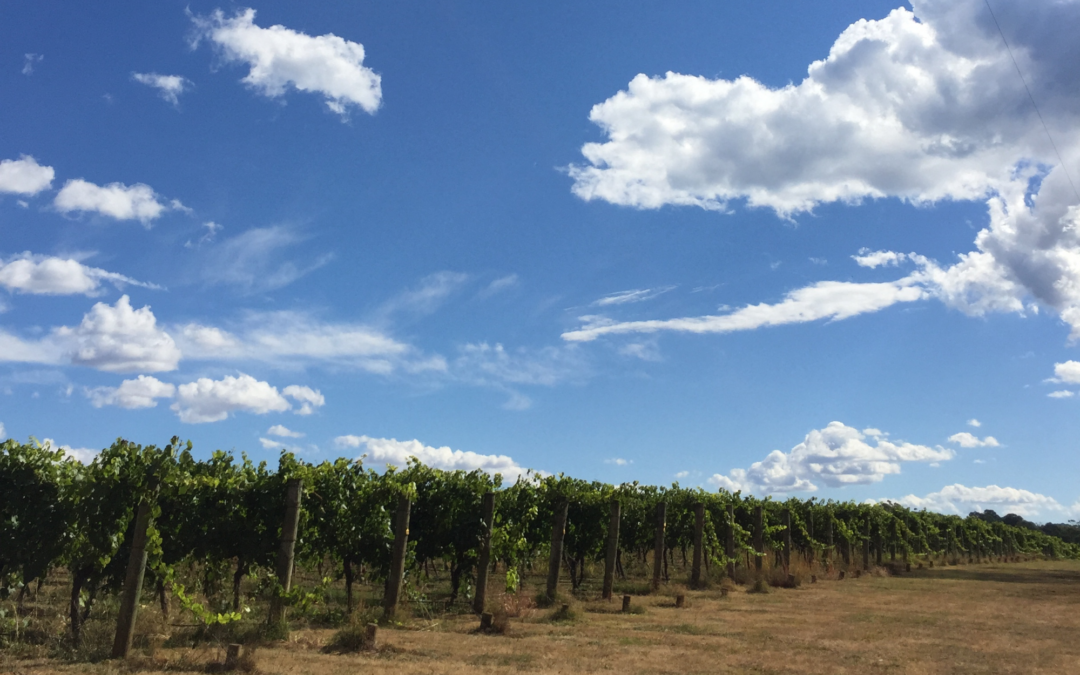
Place, also known as terroir, is one part science and one part magic. Suspend your disbelief for a moment and consider this: the flavour & structure of grapes changes depending on where they are grown, and the season they are grown in. Quite different to lots of other fruits. In a macro sense, the vineyard determines lots of things that we see consistently across decades i.e. we often say that our wines are very delicate because of where they are grown. Then, within that, the conditions of each season tweak these broader assumptions; which is where the detail lives. So, for example, the ratio of acids and sugars, strength of tannins, sunlight hours, rainfall, wind/hail/frost damage and lots of others change every year – giving what we call ‘vintage variation’.
Where to start then?
So when it’s time to learn about wine, where the hell do you start? How is it possible to understand something that changes every year, is made from countless grape varieties, by over two thousand producers (that’s just in Australia!) with over fifteen thousand brands — something so fantastically mysterious it even has its own language?
Well, you start with what’s in your glass. Whether you’re drinking a flute of bubbly or a “copita” of sherry, every single wine’s identity and character can be traced back to only three origins:
- The grapes & place — Each grape variety has its own inherent flavour characteristics that interact in countless ways with the terroir of the vineyard that produces it. This includes the ripeness of the grapes at harvest.
- The winemaking — The process can be tweaked in various ways to encourage certain flavours and characteristics.
- The ageing — What happens to the wine after it’s bottled. Time in bottle has the potential to change a wine significantly.
All of these origins combine to create a completely individual wine with a unique flavour spectrum — understanding them helps you predict what kinds of flavours you’ll get before you even open the bottle.
What the hell is “complexity”?
It means different things to different people, but generally it refers to a wine with a lot of winemaker influence — a really oaky wine, or a really stalky one maybe. In this sense the wine is “complex” because the flavours aren’t just from the grapes — they’ve been “built up.” The opposite is “simple” (or “pure”), where the flavours originate entirely from the grapes. Complexity can also describe a wine that has a lot going on in terms of dimension, flavour or taste — a catch-all word for a wine you might have trouble describing. Handy.
A bit more on grapes
Each grape variety has its own set of flavours, which change as the grape ripens. An unripe grape will likely show greener, vegetal flavours. A ripe grape will likely show tropical or jammy fruit flavours, shaped further by the terroir of the vineyard. This means the time of harvest is critical — the sugar and flavour ripeness determine the main flavours in the wine (and the sugar level determines the alcohol in the final wine).